Bheel heritage jewellery reflects the cultural identity, craftsmanship and artistic traditions of the Bhil communities of western and central India. Traditional adornment is closely connected with community life, while Bhil art is recognised for nature-inspired imagery, expressive figures and distinctive patterns that continue to inspire interest in Indian tribal jewellery.
Bheel heritage jewellery represents more than traditional adornment; it reflects identity, craftsmanship and a living cultural tradition. The Bhils have communities across regions including Madhya Pradesh, Gujarat, Rajasthan and Maharashtra, with distinctive traditions varying between regions. Their artistic heritage offers a fascinating window into India's diverse jewellery history. At Jewelove, this appreciation for Indian craftsmanship continues through heritage-inspired jewellery.
What Is Bheel Heritage Jewellery?
Bheel heritage jewellery refers to jewellery associated with the traditional adornment and cultural practices of Bhil communities. The term is often used broadly when discussing the jewellery, ornaments and artistic aesthetics associated with Bhil heritage.
The Bhils are one of India's major tribal communities, with significant populations across western and central India. Their cultural traditions are diverse, and the Bhils of Rajasthan, Madhya Pradesh and other regions do not share one completely uniform artistic or ceremonial tradition.
This diversity is important when understanding Bheel tribal jewellery. Rather than viewing it as a single fixed design style, it is better understood as part of a wider cultural landscape in which jewellery, clothing, rituals, art and community identity intersect.
Understanding Bheel Jewellery Through Cultural Heritage
Jewellery has traditionally served purposes beyond personal decoration across many Indian communities. It can express identity, mark important occasions and complement traditional clothing.
For Bhil communities, visual culture is particularly rich. Bhil artists have traditionally represented their surroundings, beliefs, rituals, animals, birds and everyday life through paintings. In Rajasthan, traditional Bhil wall paintings known as mandno use stylised line drawings and depict subjects including gods, flowers, animals and birds.
This artistic vocabulary provides valuable context for understanding the visual appeal of heritage-inspired adornment.
What Makes Bheel Tribal Jewellery Distinctive?
Traditional tribal jewellery across India varies significantly by community and region. Bhil women have traditionally worn substantial ornaments, including jewellery made from silver and brass, along with beads and silver coins.
The resulting aesthetic can be bold, tactile and expressive. It often sits comfortably alongside the colourful textiles and handcrafted visual traditions associated with Indian tribal communities.
A Brief History of Bheel Heritage and Traditional Jewellery
Understanding Bheel heritage jewellery begins with understanding the people and artistic traditions behind it.
The Bhils have a long-established presence in states including Madhya Pradesh, Gujarat, Rajasthan and Maharashtra. Their cultural identity is not uniform: even communities in Madhya Pradesh and Rajasthan have differences in their deities, songs, dances, stories and traditions.
Who Are the Bhils?
The Bhils are among India's largest tribal communities. Traditional knowledge, local geography, agriculture, art and community practices have all contributed to their cultural identity.
The word "Bhil" is commonly associated with the bow, reflecting the community's longstanding association with archery. Historical and cultural records also document their artistic traditions, including painting, storytelling and ritual practices.
The Role of Jewellery in Bhil Culture
Jewellery forms an important part of traditional Indian adornment, and Bhil communities have their own established ornament traditions.
Traditional ornaments can complement clothing while also forming part of festive, social and ceremonial dressing. Heavy silver and brass ornaments, beadwork and coin jewellery have been documented among Bhil women.
This makes jewellery an important part of the broader tribal jewellery history of India.
Bheel Art and Its Influence on Jewellery
Bhil art is particularly important for understanding the community's visual heritage.
Nature, animals, birds, human figures, religious subjects and community rituals appear repeatedly in Bhil artistic traditions. Artists such as Goma Pargi and Jibli Pargi have created works featuring animals, people, festivals and ancestral memory.
The connection between nature and artistic expression is especially striking. Bhil artists have traditionally used their surroundings as a source of visual storytelling, making the natural world an important part of their cultural vocabulary.
Traditional Materials Used in Indian Tribal Jewellery
The materials used in Bheel heritage jewellery can vary according to community, location, purpose and period. Broader Indian tribal jewellery traditions demonstrate remarkable variety, from precious metals to natural and locally available materials.
Silver and Traditional Metals
Silver has a strong presence in traditional Indian adornment, including among Bhil communities. Traditional Bhil women have been documented wearing heavy silver and brass ornaments, along with silver coins.
Metal jewellery offers durability while creating the substantial appearance associated with many traditional tribal ornaments.
Beads and Decorative Elements
Beads and coins can add texture, movement and visual interest to traditional jewellery. Across India's many communities, locally available materials have historically contributed to distinctive jewellery traditions.
The result is an aesthetic that values craftsmanship and individuality rather than relying exclusively on precious stones or elaborate gemstone settings.
Traditional Designs and Motifs in Bheel Tribal Jewellery
Bhil artistic heritage provides a rich visual context for understanding traditional adornment.
Nature-Inspired Motifs
Animals, birds and natural subjects are prominent in documented Bhil art. Peacocks, cattle, goats, birds and other elements of rural life appear in traditional paintings, while nature remains a recurring theme among Bhil artists.
These themes demonstrate how closely art and environment are connected within Bhil cultural expression.
Geometric and Repetitive Patterns
Stylised forms and geometric patterns are also present in Bhil artistic traditions. The gotrej, for example, is a significant motif in some Bhil wall paintings and contains layered meanings.
Repetition, line work and stylisation give traditional artwork a distinctive visual rhythm that can be appreciated alongside the forms and textures of heritage jewellery.
Colour and Visual Expression
Colour is another important part of Bhil art. Traditional paintings use expressive imagery to tell stories about nature, religious traditions, festivals and everyday life.
This vibrant artistic language helps explain why Indian heritage jewellery continues to appeal to people who value pieces with a strong visual identity.
Bheel Jewellery and the Wider History of Indian Tribal Jewellery
Bheel heritage jewellery is one part of India's much larger and incredibly diverse jewellery landscape.
Indian tribal jewellery includes numerous regional traditions associated with different communities, environments and cultural practices. Gond, Santhal, Bhutia, Khasi and other communities each have their own artistic languages and jewellery traditions.
How Bheel Jewellery Fits Into Indian Tribal Jewellery
There is no single definition of Indian tribal jewellery. Styles differ according to geography, community, materials, cultural practices and historical influences.
Bhil jewellery therefore deserves to be understood within its own cultural context rather than being grouped into one generic "tribal" aesthetic.
Bheel, Gond, Santhal and Other Tribal Jewellery Traditions
The diversity of Indian tribal jewellery is one of its greatest strengths. Each tradition can reveal something about the community that created and wore it.
Bhil art, for example, draws heavily on nature, rituals, animals, stories and community life. Gond artistic traditions have their own distinctive visual language, while other communities have developed different approaches to materials, motifs and ornamentation.
What Is the Cultural Significance of Bheel Heritage Jewellery?
Bheel heritage jewellery carries significance because traditional adornment exists within a wider cultural system.
It can represent:
- Cultural identity and belonging
- Traditional craftsmanship
- Personal adornment
- Festive and ceremonial dressing
- Community heritage
- Continuity between generations
- A connection with local artistic traditions
The same principle applies to traditional tribal jewellery more broadly. Its value lies not only in the finished ornament but also in the knowledge, techniques, stories and cultural context surrounding it.
Preserving that context matters. Bhil art itself has been passed through generations, with artists learning by observing parents and elders. Jibli Pargi, for example, learned to draw by watching her parents, while Goma Pargi inherited an artistic tradition that extended through several generations of his family.
From Traditional Tribal Jewellery to Contemporary Designs
Today, heritage continues to influence jewellery design in many forms.
Contemporary jewellery does not need to replicate a historical ornament exactly. Designers can draw inspiration from traditional craftsmanship, silhouettes, colours, textures and storytelling while creating pieces suited to modern wardrobes.
This approach allows ethnic jewellery heritage to remain relevant without treating traditional culture as a passing trend.
How Traditional Jewellery Inspires Modern Jewellery
Modern interpretations can bring together:
- Traditional silhouettes with refined proportions
- Heritage-inspired colours with contemporary styling
- Traditional craftsmanship with modern finishing
- Statement forms with versatile wearability
- Historical influences with individual expression
The key is to appreciate the story behind an aesthetic rather than reducing it to decoration.
Why Heritage Jewellery Continues to Appeal
Heritage jewellery offers something beyond visual appeal: a sense of connection.
A carefully crafted piece can become part of a personal story, whether it is worn at a wedding, festival, celebration or simply as a statement of personal style.
That emotional quality is one reason ethnic jewellery heritage continues to influence contemporary Indian jewellery.
Heritage-Inspired Jewellery at Jewelove
At Jewelove, the appreciation of Indian craftsmanship extends across traditional and contemporary fine jewellery. The brand's Kundan Meena collection celebrates a longstanding Indian jewellery craft, while its broader assortment includes Polki, diamond, gold and platinum jewellery. Jewelove describes itself as a fourth-generation jewellery business founded by Sambhav Karnawat, bringing generations of jewellery experience into a contemporary setting.
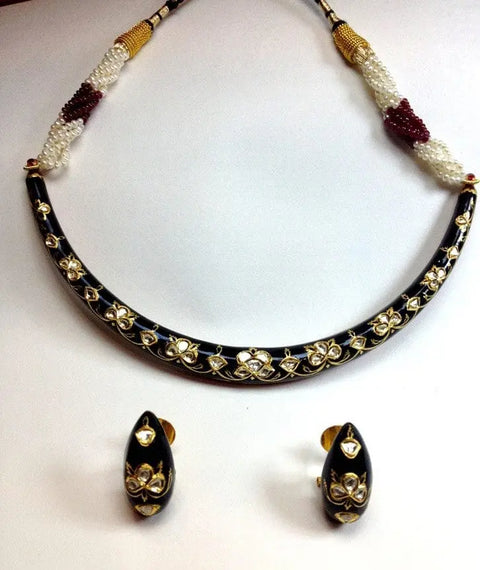
The Kundan Meena collection offers particularly relevant examples of how Indian heritage can be expressed through refined jewellery designs. The collection includes enamel work, Polki diamonds, traditional silhouettes and colourful gemstone combinations.
Some pieces that reflect this broader heritage-led aesthetic include:
- Traditional Indian Navrattan Earrings with Uncut Diamond Polki by Jewelove
- Blue Enamel Jhumkis with Uncut Diamond Polki
- Royal Jhumki Earrings Pair by Jewelove
- Royal Thepta style Diamond Polki Pendant Set by Jewelove
- Green Meena Hasli Set with Uncut Diamond Polkis by Jewelove
- Uniquely made Diamond Polki with Red Meena Hasli by Jewelove
These pieces should not be described as Bheel jewellery; instead, they demonstrate the wider richness of Indian jewellery traditions and the ways heritage craftsmanship can be expressed through contemporary fine jewellery. Jewelove's current Kundan Meena collection is presented as made in India and includes traditional Indian forms alongside Polki and Meena work.
How to Style Heritage-Inspired Jewellery Today
The beauty of Bheel heritage jewellery and other traditional influences lies in their ability to complement both classic and contemporary Indian dressing.
For Festive Occasions
Pair statement earrings or a traditional necklace with:
- Sarees
- Handwoven textiles
- Anarkalis
- Lehengas
- Richly textured fabrics
For Weddings
Jhumkis, Polki earrings and heritage-inspired necklaces can add depth to bridal and wedding guest looks.
Pieces such as the Royal Jhumki Earrings Pair by Jewelove can become the focal point when paired with a relatively understated neckline.
For Contemporary Looks
Heritage jewellery does not always need traditional clothing.
Try one statement piece with:
- A plain silk saree
- A contemporary kurta
- A tailored Indian outfit
- A solid-colour dress
- A modern fusion ensemble
The contrast allows the craftsmanship of the jewellery to take centre stage.
Why Preserving Tribal Jewellery Heritage Matters
The value of Bheel heritage jewellery extends beyond fashion. It belongs to a larger conversation about preserving India's diverse cultural traditions.
Bhil artistic traditions continue to document stories, rituals, nature and community memory. Institutions such as the Indira Gandhi National Centre for the Arts have documented Bhil art and artists from Rajasthan and Madhya Pradesh, helping preserve this cultural knowledge for future generations.
For jewellery enthusiasts, appreciating heritage means looking beyond appearance and understanding the cultural context behind traditional forms.
That perspective also creates a more meaningful relationship with traditional tribal jewellery: one based on craftsmanship, history and respect.
Bheel Heritage Jewellery vs Modern Tribal-Inspired Jewellery
|
Bheel Heritage Jewellery |
Modern Tribal-Inspired Jewellery |
|
Rooted in Bhil cultural traditions |
Inspired by broader traditional aesthetics |
|
Connected to community heritage |
Designed for contemporary wardrobes |
|
Reflects regional traditions |
May combine multiple design influences |
|
Carries cultural context |
Primarily expresses modern personal style |
|
Traditional forms and materials may be used |
Modern materials and techniques may be introduced |
Understanding this distinction helps preserve the authenticity of Bheel tribal jewellery while allowing designers and jewellery lovers to appreciate heritage-inspired design in new ways.
Discover the Beauty of Indian Jewellery Heritage With Jewelove
Bheel heritage jewellery reminds us that jewellery can preserve stories, identity and craftsmanship across generations. The wider world of Indian jewellery offers equally rich traditions, from Kundan Meena and Polki to contemporary interpretations of classic forms.
At Jewelove, this connection between heritage and fine craftsmanship remains central to the brand. Founded by fourth-generation jeweller Sambhav Karnawat, Jewelove brings traditional Indian artistry into a contemporary fine-jewellery experience.
Explore pieces such as the Royal Thepta style Diamond Polki Pendant Set by Jewelove, Red Meena Hasli with Uncut Diamond Polkis by Jewelove, and Traditional Indian Navrattan Earrings with Uncut Diamond Polki by Jewelove to discover jewellery that celebrates the enduring beauty of Indian craftsmanship.
Explore Jewelove's heritage-inspired jewellery collection and find a piece that brings timeless Indian artistry into your own story.
Frequently Asked Questions
Q1. What Is Bheel Heritage Jewellery?
Bheel heritage jewellery refers to traditional adornment associated with Bhil communities and their cultural traditions. It forms part of India's diverse tribal jewellery heritage.
Q2. How Is Bheel Tribal Jewellery Different From Other Tribal Jewellery?
Bheel tribal jewellery is connected specifically to Bhil communities and their regional traditions. Indian tribal jewellery as a whole includes many distinct community-specific styles.
Q3. Can Bheel Jewellery Be Worn With Contemporary Outfits?
Yes. Heritage-inspired earrings, necklaces and other statement pieces can be paired with contemporary Indian or fusion outfits for a balanced look.
Q4. Is Bheel Jewellery Traditionally Made With Silver?
Silver has a documented place in traditional Bhil adornment, with Bhil women traditionally wearing heavy silver and brass ornaments, beads, and silver coins.
Q5. What Makes Traditional Tribal Jewellery Culturally Important?
Traditional tribal jewellery reflects identity, craftsmanship, community practices and cultural heritage. Its importance extends beyond its decorative appearance.
Q6. Will Tribal Jewellery Remain Relevant in Modern Fashion?
Yes. Traditional forms, craftsmanship and cultural influences continue to inspire contemporary jewellery while allowing people to express individuality.
Q7. Why Is Bheel Art Important to Understanding Its Jewellery Heritage?
Bhil art reveals recurring connections with nature, animals, rituals, stories, and community life. Understanding this visual culture provides deeper context for appreciating Bhil heritage.
Q8. What Jewellery Can I Explore for an Indian Heritage-Inspired Look?
Jewelove offers heritage-inspired Kundan Meena and Polki jewellery, including Traditional Indian Navrattan Earrings with Uncut Diamond Polki by Jewelove, Blue Enamel Jhumkis with Uncut Diamond Polki, and Green Meena Hasli Set with Uncut Diamond Polkis by Jewelove.