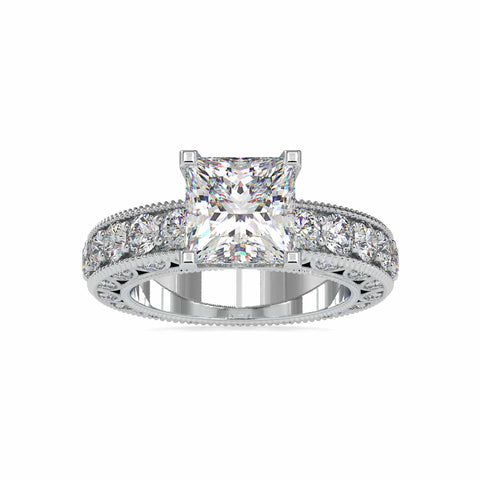
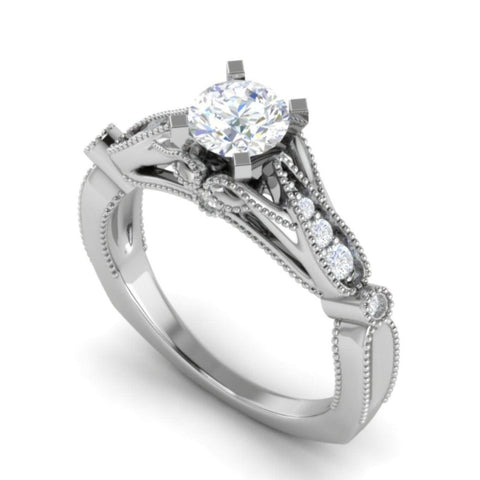
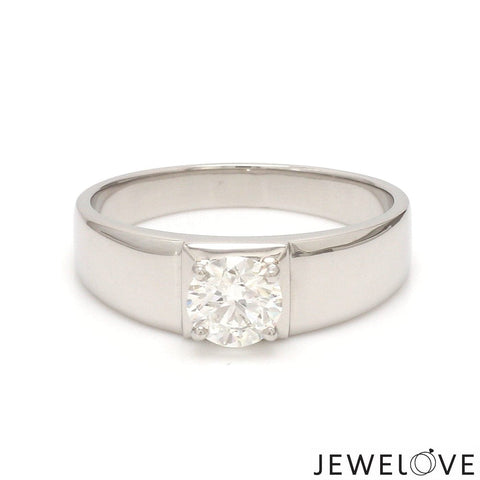
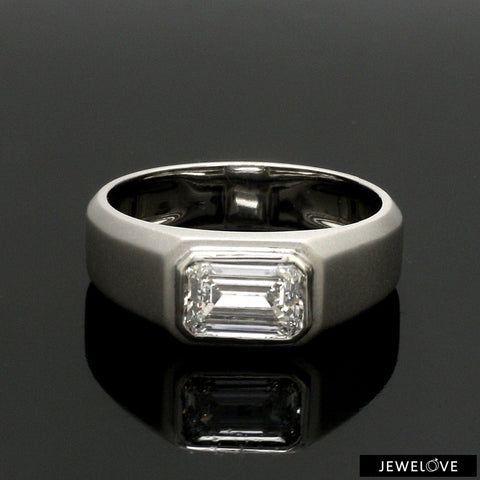
A lab grown diamond price in India typically ranges from ₹20,000 to ₹4,50,000+ depending on carat weight, cut, colour, clarity, and certification. The lab grown diamond price 1 carat is usually between ₹60,000 and ₹1,20,000, while a 0.9 carat lab grown diamond India price generally falls between ₹45,000 and ₹90,000. Always choose certified diamonds with an IGI grading report.
The lab grown diamond price in India is significantly lower than that of a comparable natural diamond, often by 40–80%. Both are real diamonds with the same physical and optical properties, but their origin differs. Buyers who want to understand how lab grown diamonds compare in terms of technology, certification, and market trends can explore a detailed guide before making a jewellery purchase decision. At Jewelove, we believe buyers should understand both options clearly before making a jewellery purchase decision.
What Is a Lab Grown Diamond?
A lab-grown diamond is a real diamond created in a controlled laboratory environment rather than being mined from the earth. It has the same chemical composition (pure carbon), hardness, brilliance, and durability as a natural diamond. The only difference is how it is formed.
Lab-grown diamonds are typically produced using one of two methods:
-
CVD (Chemical Vapour Deposition)
-
HPHT (High Pressure High Temperature)
Because they are genuine diamonds, they can be certified and graded using the same quality standards as natural diamonds.
Lab Grown Diamond Price Table (By Carat)
The exact lab grown diamond price depends on the 4Cs—Cut, Colour, Clarity, and Carat Weight—along with certification and market conditions.
|
Carat Weight |
Approximate Price Range in India (2026) |
|
0.50 Carat |
₹20,000 – ₹40,000 |
|
0.70 Carat |
₹30,000 – ₹60,000 |
|
0.90 Carat |
₹45,000 – ₹90,000 |
|
1.00 Carat |
₹60,000 – ₹1,20,000 |
|
1.50 Carat |
₹1,20,000 – ₹2,50,000 |
|
2.00 Carat |
₹2,00,000 – ₹4,50,000+ |
Lab Grown Diamond Price 1 Carat
The lab grown diamond price 1 carat in India typically ranges from ₹60,000 to ₹1,20,000 for a well-cut, certified diamond. Premium colour grades (D–F) and higher clarity grades (VS1–VVS2) command higher prices. Women looking for elegant certified diamond pieces can explore platinum and diamond rings for women that pair a quality lab-grown or natural stone with a premium platinum setting.
Price of 1 Carat Lab Grown Diamond India
The price of 1 carat lab grown diamond India buyers pay varies depending on certification, shape, cut quality, and retailer. Round brilliant diamonds generally cost more than fancy shapes because of higher demand.
0.9 Carat Lab Grown Diamond India Price
A 0.9 carat lab grown diamond India purchase can offer excellent value. Prices generally range between ₹45,000 and ₹90,000, making it a popular choice for buyers seeking near-1-carat visual appearance at a lower cost.
Natural vs Lab Grown Diamond: Complete Comparison
Many buyers compare a natural vs lab grown diamond before making a final decision.
|
Feature |
Natural Diamond |
Lab-Grown Diamond |
|
Origin |
Formed naturally over billions of years |
Created in weeks in a laboratory |
|
Chemical Composition |
Diamond |
Diamond |
|
Hardness |
10 on Mohs Scale |
10 on Mohs Scale |
|
Sparkle & Appearance |
Same |
Same |
|
Certification |
GIA, IGI, others |
IGI, GIA, others |
|
Rarity |
Naturally rare |
Manufactured |
|
Price |
Higher |
Lower |
|
Availability |
Limited |
Widely available |
|
Resale Value |
Generally stronger |
Usually limited |
|
Investment Potential |
Better |
Lower |
|
Emotional Value |
Often linked to rarity |
Often linked to value-for-money |
Scientifically, both diamonds are real diamonds. The primary differences are rarity, price, and long-term market value. Buyers who are also evaluating metal choices alongside stone selection can read about whether platinum is more expensive than diamond to better understand how the metal and stone together affect the final price of a piece.
Do Lab Grown Diamonds Hold Resale Value?
This is one of the most important questions buyers ask.
In general, lab-grown diamonds do not currently retain value as well as natural diamonds. The resale market is still developing, and manufacturing costs have continued to decline over time. As a result, previously purchased lab-grown diamonds often face significant depreciation.
Many industry observers estimate that resale offers for lab-grown diamonds may range from approximately 5% to 15% of the original purchase price, depending on the diamond and local market demand.
If long-term value retention is a major priority, natural diamonds currently have an advantage. For a broader comparison of certified natural diamond pricing across categories, buyers can refer to a detailed guide on real diamond price in India to evaluate options more accurately.
CVD vs HPHT — Which Is Better?
The two primary methods used to create lab-grown diamonds are CVD and HPHT.
CVD (Chemical Vapour Deposition)
-
Widely used for jewellery-grade diamonds
-
Allows precise growth control
-
Common for larger stones
-
Popular in today's lab-grown diamond industry
HPHT (High Pressure High Temperature)
-
Replicates the natural diamond-forming environment
-
Produces high-quality diamonds
-
Often used for both industrial and gem-quality applications
Which Should You Choose?
For most buyers, the growth method matters less than the final diamond quality. A well-cut, certified CVD diamond can be superior to a poorly cut HPHT diamond, and vice versa.
Focus on:
-
Certification
-
Cut quality
-
Colour grade
-
Clarity grade
-
Light performance
rather than choosing solely based on the growth method.
How to Buy a Lab-Grown Diamond
1. Choose a Certified Diamond
Always purchase a diamond with an independent grading report.
IGI remains one of the most widely recognised certification authorities for lab-grown diamonds and continues to grade them using the traditional 4Cs.
2. Check the 4Cs
Evaluate:
-
Cut
-
Colour
-
Clarity
-
Carat Weight
Cut quality often affects beauty more than carat size. Couples celebrating a milestone with a certified diamond piece can explore platinum diamond rings for couple that feature coordinated designs in durable and premium platinum settings.
3. Verify the Report Number
Many certified diamonds have laser inscriptions that match the grading report.
4. Compare Multiple Options
Do not choose solely based on carat weight. Compare overall quality and visual performance.
5. Buy From a Trusted Jeweller
Choose a jeweller that clearly discloses whether a diamond is natural or lab-grown and provides complete certification details. Transparency is essential. Those who prefer understated yet refined diamond pieces can also explore diamond platinum stud earrings as a versatile certified diamond option for everyday wear.
Who Should Buy Lab-Grown Diamonds?
Lab-grown diamonds may suit buyers who:
-
Want a larger-looking diamond for the same budget
-
Prioritise affordability
-
Are buying fashion jewellery
-
Prefer modern alternatives
Who Should Buy Natural Diamonds?
Natural diamonds may suit buyers who:
-
Value rarity
-
Want stronger resale potential
-
Are purchasing heirloom jewellery
-
Prefer naturally formed gemstones
There is no universally correct choice. The right option depends on your priorities, budget, and long-term expectations.
Why Choose Jewelove?
Jewelove is one of India's leading specialists in premium platinum jewellery and certified diamond jewellery. Founded by Sambhav Karnawat, a fourth-generation jeweller and IIT Kanpur alumnus, the brand is known for combining traditional jewellery expertise with transparent, education-first guidance.
Unlike many jewellery retailers that focus purely on selling, Jewelove places strong emphasis on helping customers understand their options — whether they are considering a natural diamond, a lab-grown diamond, or platinum jewellery. Buyers who appreciate bold and distinctive diamond designs can also explore the luxury diamond ring collection at Jewelove for premium pieces that go beyond conventional styles.
When you shop with Jewelove, you benefit from:
-
Certified diamonds and jewellery
-
Pt950 hallmarked platinum jewellery
-
Platinum Guild International (PGI) Certificate of Authenticity
-
Bespoke and customised jewellery options
-
Worldwide insured delivery
-
Expertise from a family with generations of jewellery experience
If you're comparing a natural vs lab grown diamond, Jewelove's approach is simple: understand the pros and limitations of each option, choose what aligns with your budget and priorities, and buy certified jewellery from a trusted jeweller.
Final Thoughts
The lab grown diamond price advantage is clear: buyers can obtain larger diamonds for significantly less money compared to natural diamonds. However, when comparing a natural vs lab grown diamond, factors such as rarity, emotional significance, and resale value should also be considered. Understanding these trade-offs will help you choose the diamond that best aligns with your goals and budget.
Frequently Asked Questions
Q1. What is the lab grown diamond price 1 carat in India?
A certified 1-carat lab-grown diamond in India typically costs between ₹60,000 and ₹1,20,000.
Q2. What is the price of 1 carat lab grown diamond India buyers usually pay?
Depending on cut, colour, clarity, and certification, most buyers pay between ₹60,000 and ₹1,20,000 for a quality 1-carat stone.
Q3. Is a lab-grown diamond a real diamond?
Yes. Lab-grown diamonds are real diamonds with the same chemical and physical properties as natural diamonds.
Q4. How much does a 0.9 carat lab grown diamond India cost?
A 0.9-carat lab-grown diamond generally costs between ₹45,000 and ₹90,000.
Q5. Do lab-grown diamonds lose value?
Yes. Most lab-grown diamonds have limited resale value and often depreciate significantly over time.
Q6. Which certification is best for lab-grown diamonds?
IGI is among the most recognised and widely used certification bodies for lab-grown diamonds.
Q7. Which is better: CVD or HPHT?
Neither is inherently better. The finished diamond's cut, colour, clarity, and certification are usually more important than the growth method.
Q8. Can you tell the difference between natural and lab-grown diamonds by looking at them?
No. Specialised equipment and certification are usually required to reliably distinguish between natural and lab-grown diamonds.
html id="lgd1c8"